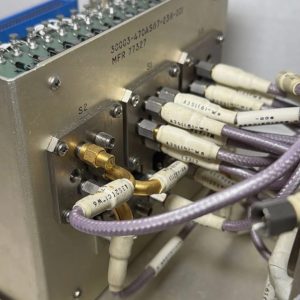
The Aviation Switching Module – NSN 4920-01-250-2696 (AS-IS / Untested) should be purchased with the understanding that no operational, calibration, serviceability, compatibility, or installation guarantee is being made.
The Aircraft Switching Module offers potential maintenance or restoration value, while the Aerospace Switching Module must be inspected for condition, completeness, modification, and storage-related deterioration.
An Aircraft Electrical Switching Module can have commercial value for technicians, while an Aviation Electrical Control Module or Aerospace Electrical Control Unit requires qualified bench evaluation before operational consideration.
The Aviation Control Module, Aircraft Switching Unit, Aerospace Power Distribution Module, Aircraft Electrical Control Unit, Aviation Power Control Module, Aircraft Electronic Switching System, Aerospace Switching Unit, and Aircraft Electrical Module keywords describe a broad aerospace-electrical product category.
Identifying the Aerospace Switching Unit
NSN 4920-01-250-2696 should be compared with the data plate, manufacturer number, contract markings, serial number, connector layout, and available documentation on the actual unit.
Unknown markings should be photographed and recorded rather than interpreted without support.
Understanding AS-IS and Untested Condition
AS-IS and untested means the module is offered without confirmation that it powers on, switches circuits, communicates with associated equipment, meets specifications, or performs its original function.
Improper voltage, polarity, grounding, current, signal input, or connector pin assignment can damage the module and connected equipment.
Choosing an Aircraft Switching Module
A module used with maintenance equipment may function differently from one installed onboard an aircraft.
A detailed visual inventory supports informed evaluation of the Aircraft Switching Module.
Maintaining a Switching Module Assembly
The module may have been designed for vibration, transportation, storage, maintenance, or aerospace operating environments, but present performance should not be assumed.
Unknown connectors should not be forced into visually similar plugs.
Electrical Switching Module Condition
External condition cannot confirm the state of hidden relays, contacts, circuit boards, wiring, or internal components.
Seals, labels, inspection marks, tamper indicators, and more info original component arrangements may have historical or technical value.
Aircraft Electrical Control Applications
The exact interface must be established through diagrams, manuals, connector data, or verified system information.
High-resolution photographs can preserve readable details before cleaning or restoration.
Aircraft Power Switching Module Considerations
Power switching equipment can create heat, arcing, or equipment damage when connected incorrectly.
Missing covers or barriers may expose conductive points and increase handling risk.
Aerospace Electrical Control Unit Evaluation
An Aerospace Electrical Control Unit may combine switching, control, indication, interface, or distribution functions within one enclosed assembly.
Detailed records support the long-term value of the Aerospace Electrical Control Unit.
Choosing an Aircraft Signal Switching Module
Qualified evaluation supports responsible Aircraft Signal Switching Module use.
Shielding, grounding straps, connector shells, cable clamps, and enclosure bonding can influence signal performance where included in the original design.
Control Module Compatibility Review
An Aviation Control Module should be treated as one component within a larger system rather than a standalone universal controller.
Compatibility should be verified through NSN, part number, manufacturer, connector layout, revision level, modification status, and equipment application.
Commercial Value of an Untested Switching Unit
Detailed condition reporting supports fair commercial evaluation.
The equipment should remain clearly labeled as untested and unsuitable for operational installation without evaluation.
Aerospace Power Distribution Module Considerations
A module should not be loaded electrically until contact condition, insulation, wiring, and circuit configuration are understood.
The original installation orientation should be researched where possible.
Control Unit Connector and Switch Review
An Aircraft Electrical Control Unit should receive an organized inspection covering identification, enclosure condition, connectors, controls, labels, hardware, internal components, and signs of environmental exposure.
Limited testing should not be described as complete serviceability verification.
Choosing an Aviation Power Control Module
The NSN’s federal supply classification may provide useful context, but the exact role should still be researched through item-specific records.
Warning labels should remain visible and legible.
Aircraft Electronic Switching System Integration
A systems approach supports more accurate troubleshooting and restoration.
A replacement AS-IS unit may provide useful comparative parts but should not be installed without evaluation.
Preserving Military Aviation Equipment
The unit should not be stacked beneath heavy equipment or left on conductive surfaces.
Insured and trackable transportation supports responsible sales of specialized aviation hardware.
Commercial Inspection of an Electrical Module
AS-IS equipment may offer attractive value when the purchaser has the knowledge and resources required for evaluation.
Remote buyers should request current photographs of the actual unit instead of relying on catalog images or pictures of similar equipment.
Aerospace Module Pre-Purchase Inspection
The AS-IS and untested condition should appear clearly within the title, description, invoice, and transaction terms.
- Determine whether cables, plugs, manuals, test leads, mounting hardware, storage cases, or companion components are included.
- Do not interpret clean appearance, smooth switch movement, or intact labels as proof of electrical operation.
- Require packaging that protects connectors, switches, labels, enclosure corners, mounting brackets, controls, and loose accessories from movement and impact.
Evaluating an Untested Electrical Module
The module should not be powered until input requirements, polarity, grounding, circuit protection, and expected loads are understood.
Initial evaluation may include mechanical switch checks, continuity testing, insulation inspection, resistance measurements, and examination for shorts or damaged components.
Restoring the Aerospace Switching Module
Restoration should begin with condition documentation, careful cleaning, technical research, component identification, fault isolation, and repair planning.
Every repair should record the date, technician, fault found, parts replaced, measurements, testing performed, and remaining limitations.
Selecting a Surplus Aerospace Switching Unit
For the right purchaser, the unit can offer a useful foundation for technical research, controlled troubleshooting, component recovery, or legacy-equipment restoration.
Buyers should request detailed photographs, accurate AS-IS disclosures, technical research, secure transaction terms, protective shipping, and qualified evaluation where appropriate.
Whether the requirement is an Aircraft Switching Module, Aerospace Switching Module, Aircraft Electrical Switching Module, or Aviation Electrical Control Module, exact identification should guide the purchase.
With transparent condition reporting, secure shipping, controlled testing, appropriate repair methods, and accurate records, the unit can support a professional aerospace project.